Karwa Chauth 2026: Date, Moonrise Time, Puja Muhurat & Vrat Vidhi
Quick Answer (Summary) Karwa Chauth 2026 falls on Thursday, October 29, 2026 — the Chaturthi of Krishna Paksha in the month of Kartik. In New Delhi the evening puja muhurat is 5:38 PM – 6:56 PM and the moon rises at about 8:17 PM, which is when the nirjala fast breaks. Moonrise is local and shifts by city (see the city-wise table below). The Chaturthi tithi runs from 1:06 AM to 10:09 PM on October 29.
Karwa Chauth 2026: Date & Timings
| Event | Date & Time (IST, Delhi) |
|---|---|
| Karwa Chauth date | Thursday, October 29, 2026 |
| Chaturthi tithi begins | 1:06 AM, Oct 29 |
| Chaturthi tithi ends | 10:09 PM, Oct 29 |
| Evening puja muhurat | 5:38 PM – 6:56 PM |
| Upavasa (fast) | ~6:31 AM (sunrise) to moonrise |
| Moonrise (Delhi) | ~8:17 PM |
| Sargi | Before sunrise, ~4:00–5:00 AM |
Timings follow Drik Panchang-based listings. Moonrise moves with your longitude — use the city table below or SanatanTools' Muhurat Finder for your exact time.
Why Some Calendars Show October 28 (and Why October 29 Is Correct)
Every year the same argument starts in some family WhatsApp group: one app says Thursday, someone's mother says Wednesday. Nobody is being careless — the confusion is built into how the date is calculated.
The rule is simple: the fast is observed on the day on which the Kartik Krishna Chaturthi is still running at moonrise — because the fast can only end after the moon is sighted. In 2026, Chaturthi begins at 1:06 AM on October 29 and ends at 10:09 PM the same night, well after moonrise (~8:17 PM). So Thursday, October 29 is the correct day in the overwhelming majority of Indian panchangs. Apps showing October 28 are generally working from a stale or different tithi table — check a current Drik Panchang before deciding.
Moonrise Time 2026 (City-Wise)
This is the single most-searched detail of Karwa Chauth, because the fast breaks only when the moon is seen. Moonrise is local — it can differ by over an hour across India.
| City | Moonrise (Oct 29, 2026, approx.) |
|---|---|
| Kolkata | 7:47 PM |
| Lucknow | 8:06 PM |
| Chandigarh | 8:12 PM |
| New Delhi | 8:17 PM |
| Jaipur | 8:28 PM |
| Ahmedabad | 8:52 PM |
| Mumbai | 9:00 PM |
Approximate, Drik Panchang-based. East rises earlier, west later — that is just geography, not a panchang dispute. Confirm your city's exact time with a local panchang or the Muhurat Finder.
What Karwa Chauth Is
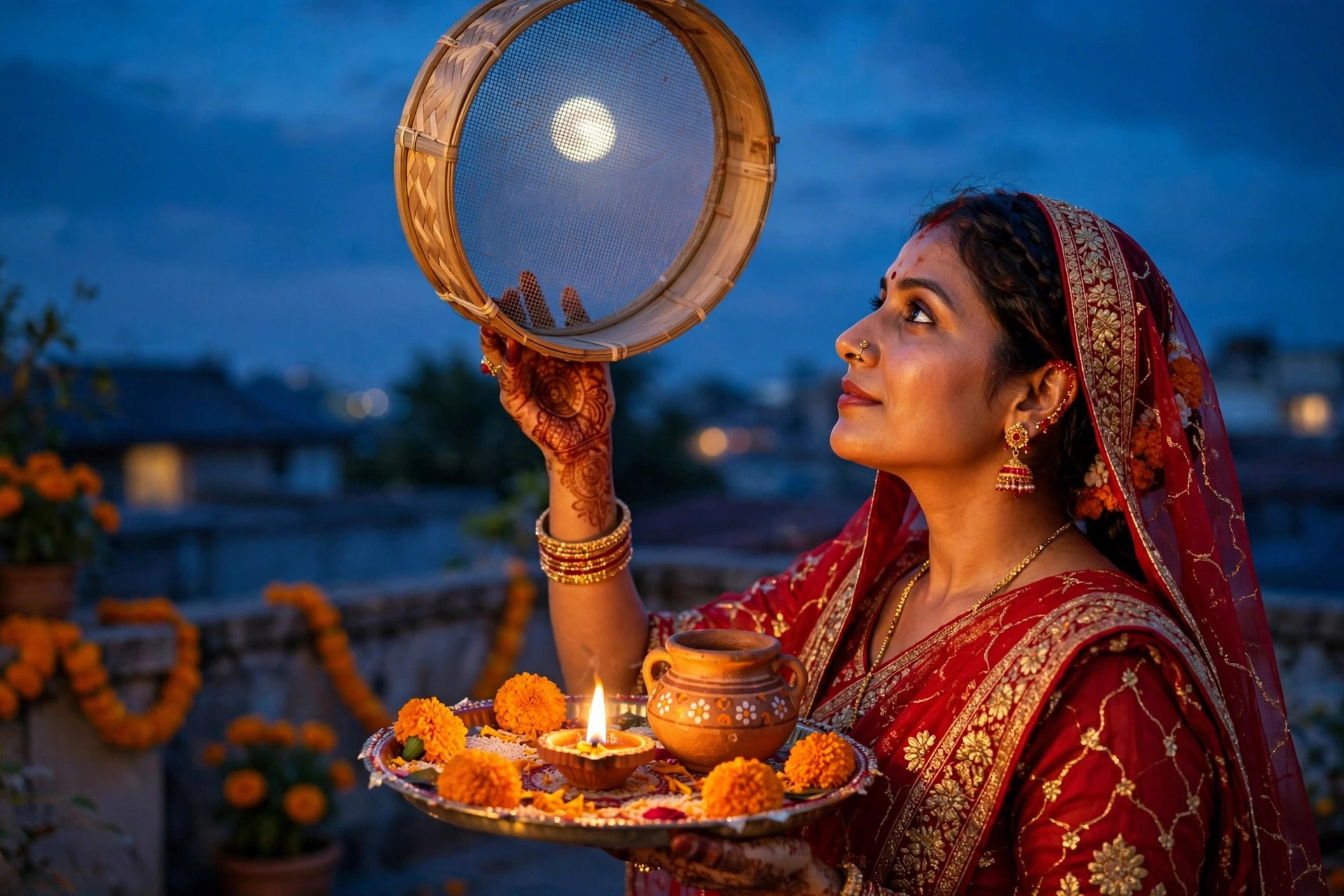
Karwa means an earthen pot with a spout; Chauth means the fourth (lunar day). The name describes the ritual itself: married women observe a strict nirjala vrat — no food, no water — from sunrise to moonrise on Kartik Krishna Chaturthi, praying to Goddess Parvati (Gauri) and the Moon for their husband's long life and the marriage's wellbeing. The fast is broken only after sighting the moon through a sieve (chalni) and offering it water (arghya).
While it is traditionally a women-led observance, many modern husbands fast alongside as a gesture of partnership. It is primarily a North Indian festival — Punjab, Haryana, Uttar Pradesh, Rajasthan, Delhi, Madhya Pradesh — though its popularity has spread with urban migration.
Sargi: The Pre-Dawn Meal
The day begins before sunrise with sargi, the meal the mother-in-law traditionally sends or serves her daughter-in-law. It is eaten in the brahma muhurta hours, roughly 4:00–5:00 AM, before the fast begins at sunrise.
Classic sargi items: fenia (vermicelli) cooked in milk, fresh fruits, dry fruits, coconut water, and light sweets. The logic is practical as much as ritual — slow-release foods that make a waterless day survivable. After sargi, the vow (sankalp) for the day's fast is taken, and nothing — not even water — is consumed until moonrise.
Samagri Checklist
Gather these before the evening puja:
- A karwa (earthen pot with spout) filled with water
- A chalni (sieve) for moon-sighting
- Puja thali: diya, roli, chawal (rice), sindoor, flowers
- Sweets and dry fruits for baya (the gift thali given to the mother-in-law)
- A red cloth / chunri, bangles — married women typically dress in bridal finery, often red
- A picture or idol of Goddess Parvati (with Shiva, Ganesha and Kartikeya worshipped alongside)
- The Karwa Chauth katha book or printout for the evening storytelling
Puja Vidhi: Step by Step
- Morning: After sargi and bath, take the day's sankalp — a quiet vow to observe the nirjala fast for your husband's wellbeing.
- Daytime: The fast continues through the day. Many women gather in the afternoon for the katha storytelling circle (see below).
- Evening preparations (~5:00 PM): Clean the puja space, arrange the thali, fill the karwa with water, dress in festive attire.
- Evening puja (5:38–6:56 PM muhurat): Worship Shiva–Parvati, Ganesha and Kartikeya. Light the diya, offer roli–chawal–flowers, and perform the karwa ritual — traditionally the earthen pots are exchanged among the women present.
- Katha: Read or listen to the Karwa Chauth katha (the story of Veervati) — this is considered an essential part of the vrat, not optional.
- Moonrise (~8:17 PM Delhi): When the moon appears, view it through the chalni, offer it water (arghya) from the karwa, then view your husband's face through the sieve.
- Breaking the fast: Drink water — traditionally first from your husband's hands — then eat. The nirjala vrat ends here.
The Katha: Story of Veervati
The katha most commonly told is that of Queen Veervati, the only sister of seven devoted brothers. On her first Karwa Chauth after marriage, she kept the nirjala fast but grew faint by evening. Her brothers, unable to bear it, held a lamp behind a sieve on a nearby hill to fake an early moonrise. Veervati broke her fast — and word came that her husband had died.
She wept and prayed through the night; moved by her devotion, the gods (in some versions Goddess Parvati herself) restored her husband to life. The moral the katha carries: the fast must be completed with full faith, and broken only at the true moonrise — which is exactly why the correct date and the real moonrise time matter so much.
(A second popular telling links the vrat to Draupadi, who is said to have observed it for Arjuna's safety. Both stories frame the fast as protection born of devotion.)
Fasting Rules & Practical Guidance
- Nirjala: No food or water from sunrise to moonrise. This is a demanding fast — pregnant women, the elderly, and anyone with a medical condition should consult a doctor and consider a modified observance; many families accept a phalahar (fruit) version for health reasons.
- Who observes: Traditionally married women; unmarried girls and men may also observe it voluntarily, which is increasingly common.
- If the moon is clouded over: Wait — the fast breaks at sighting, not at the clock time. Panchangs give the expected moonrise; clouds can delay the actual sighting.
- Working women: The evening puja muhurat (5:38–6:56 PM) is after typical office hours in most cities, which is one reason the muhurat matters practically, not just ritually.
Significance: Why This Fast Endures
Strip away the ritual detail and Karwa Chauth is a public, disciplined act of care — a day a wife dedicates entirely, bodily, to her husband's life, and increasingly a day couples dedicate to each other. The sargi binds mother-in-law and daughter-in-law; the katha circle binds the neighbourhood's women; the shared moonrise binds the couple. In a festival calendar full of grand public celebrations, Karwa Chauth remains intimate and family-centred — which may be exactly why it has survived centuries unchanged.
FAQs
Is Karwa Chauth on October 28 or 29 in 2026? October 29 (Thursday). Chaturthi runs 1:06 AM–10:09 PM on Oct 29, covering moonrise (~8:17 PM Delhi). Apps showing Oct 28 use stale tithi tables.
What time does the moon rise on Karwa Chauth 2026? About 8:17 PM in Delhi; earlier in the east (Kolkata ~7:47 PM), later in the west (Mumbai ~9:00 PM). Check the city table above.
When is the puja muhurat? 5:38 PM–6:56 PM (Delhi, Drik Panchang-based). Timings shift slightly by city and source — confirm locally.
Can the fast be broken if the moon is not visible? Traditionally no — the fast ends at moon-sighting, not at the scheduled time. If clouds hide the moon, wait for the sighting.
What is sargi? The pre-dawn meal (before sunrise) sent by the mother-in-law — fenia/vermicelli kheer, fruits, dry fruits — eaten before the nirjala fast begins.
Do husbands fast too? Traditionally the vrat is the wife's; modern couples increasingly fast together as a mutual gesture.
Planning the evening? Get your city's exact moonrise and puja window with SanatanTools' Muhurat Finder, and explore the AI Astrologer for deeper kundli-based guidance on auspicious timings.
Related reading
- Diwali 2026: Date, Lakshmi Puja Muhurat, 5-Day Festival Guide & Puja Vidhi
- Chhath Puja 2026: Dates, Arghya Timings, 4-Day Vidhi & Puja Samagri
- Devuthani Ekadashi 2026: Date, Vrat Vidhi, Tulsi Vivah & End of Chaturmas
- Kartik Purnima 2026: Date, Dev Deepawali in Varanasi, Tripuri Purnima Vidhi & Significance
- Govardhan Puja 2026: Date, Annakut Muhurat, Puja Vidhi & Significance
- Dhanteras 2026: Date, Puja Muhurat, Kya Kharidein, Vidhi & Significance
- Bhai Dooj 2026: Date, Tilak Muhurat, Puja Vidhi & Significance
- Narak Chaturdashi 2026: Date, Abhyang Snan Muhurat, Kali Chaudas & Puja Vidhi